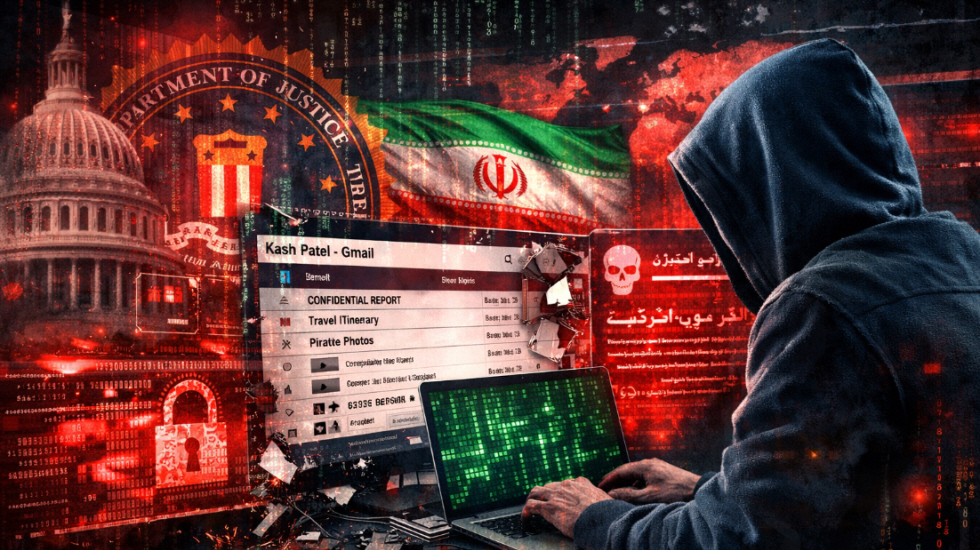
In recent days, an Iran-linked hacking group has exposed a new dimension of modern conflict: digital warfare. Operating under the name “Handala,” these actors claim to have accessed the personal email account of a key figure within the U.S. security landscape. The incident has raised concerns across political and technological circles. It has also reignited debates about vulnerability in the digital age. The case involves Kash Patel, a prominent figure connected to the U.S. security environment.
According to reports, the attackers gained access to his personal email account, extracting information that was later منتشر online. These types of leaks are designed not only to expose data but also to shape public perception. The propagandistic dimension is central to such operations. U.S. authorities have acknowledged the incident but emphasized that it did not involve any breach of official government systems. This means that FBI infrastructure was not compromised. However, the media impact has been significant.
The line between personal and institutional security continues to blur. Cybersecurity experts suggest that this type of operation is part of a broader hybrid warfare strategy. It is not just about obtaining information, but about destabilizing narratives and creating distrust. State-linked actors and their digital proxies operate across multiple fronts. Cyberspace has become a parallel battlefield. The group “Handala” has previously been associated with digital campaigns aligned with Iranian interests. While not all of its claims can be independently verified, its activity has been closely monitored by international agencies.
In this case, the release of older emails suggests the possibility of prolonged access. The exact timeline of the breach remains under review. The fact that the intrusion targeted a personal account does not diminish the seriousness of the incident. On the contrary, it highlights a critical vulnerability in the everyday digital practices of high-profile individuals. Security is no longer confined to institutional systems. It increasingly depends on personal safeguards.
This episode unfolds amid rising tensions between the United States and Iran, where confrontation is no longer limited to military domains. The digital dimension continues to gain importance. Online operations enable covert actions with substantial impact. Modern warfare is constantly evolving.
For now, the case remains under evaluation as experts assess the true scope of the breach. Beyond the technical details, the incident sends a clear message: no environment is entirely secure. Cybersecurity is becoming a global strategic priority. And increasingly, conflict is being fought in silence.