
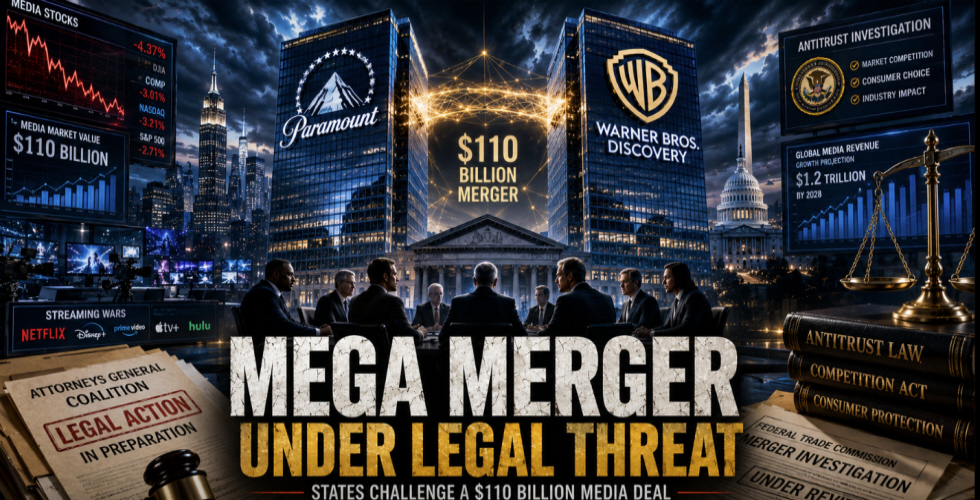
The proposed acquisition of Warner Bros. Discovery by Paramount has become one of the most closely watched corporate stories in the United States. Valued at approximately $110 billion, the transaction has the potential to reshape the global media and entertainment landscape. However, the deal is also attracting significant scrutiny from state regulators concerned about its long-term impact on competition. The size and influence of the companies involved have placed the proposal under an intense spotlight. According to sources familiar with the matter, several U.S. states are preparing legal action aimed at blocking the merger.
State attorneys general reportedly believe the transaction could reduce competition across multiple sectors of the media industry. Their concerns include the concentration of content production, advertising, television networks, streaming services, and distribution platforms. A formal lawsuit could reportedly be filed as early as next week. Regulators argue that a combined Paramount and Warner Bros. Discovery would possess enormous influence over the entertainment market. The merger would unite major film studios, television channels, digital platforms, and extensive content libraries under a single corporate structure.
Critics fear that such concentration could make it more difficult for smaller competitors to thrive. They also worry that consumers could face fewer choices in the future. If completed, the merger would create one of the largest media conglomerates in the world. Both companies own globally recognized brands and valuable intellectual property that generate billions of dollars in revenue. Their combined assets would strengthen their position against major technology firms that have expanded aggressively into entertainment. At the same time, the deal would intensify debate over the growing concentration of power within the media sector.
Supporters of the transaction argue that the entertainment industry has changed dramatically over the past decade. Traditional media companies now compete directly with global streaming platforms and technology giants that possess vast financial resources. From this perspective, consolidation is viewed as a necessary strategy for remaining competitive in an increasingly digital marketplace. Executives believe the merger could create operational efficiencies and stronger long-term growth opportunities. Opponents, however, contend that a merger of this scale could limit innovation and reduce market diversity.
Some analysts warn that fewer competitors may weaken incentives to improve services, expand consumer options, and invest in new content. Concerns have also been raised about potential job cuts and organizational restructuring. Large mergers often result in overlapping operations that companies seek to streamline after completion. Investors are closely monitoring developments because of the significant financial implications involved. A lengthy legal battle could delay the transaction or potentially prevent it from moving forward altogether. Financial markets tend to react strongly when major corporate deals encounter regulatory challenges.
As a result, every new development related to the proposed lawsuit is likely to receive considerable attention from Wall Street. The advertising industry could also experience meaningful changes if the merger proceeds. A larger media company would possess greater leverage when negotiating advertising agreements and commercial partnerships. This could alter relationships between advertisers, agencies, broadcasters, and streaming platforms. Industry experts believe the effects could extend far beyond the entertainment business itself.
Meanwhile, executives from both companies continue to defend the transaction and its strategic value. They argue that combining resources would benefit shareholders while allowing the organization to compete more effectively on a global scale. Company leaders also emphasize that competition increasingly comes from international technology and streaming companies with enormous market reach. In their view, consolidation represents a logical response to industry transformation.
The coming days may prove critical in determining the future of one of the largest media deals in recent history. If state governments move forward with legal action, the merger could face a prolonged regulatory and courtroom battle. The outcome will likely influence the direction of future consolidation efforts throughout the entertainment industry. Beyond the financial figures involved, the dispute represents a broader debate about competition, corporate power, and the future of media in America.