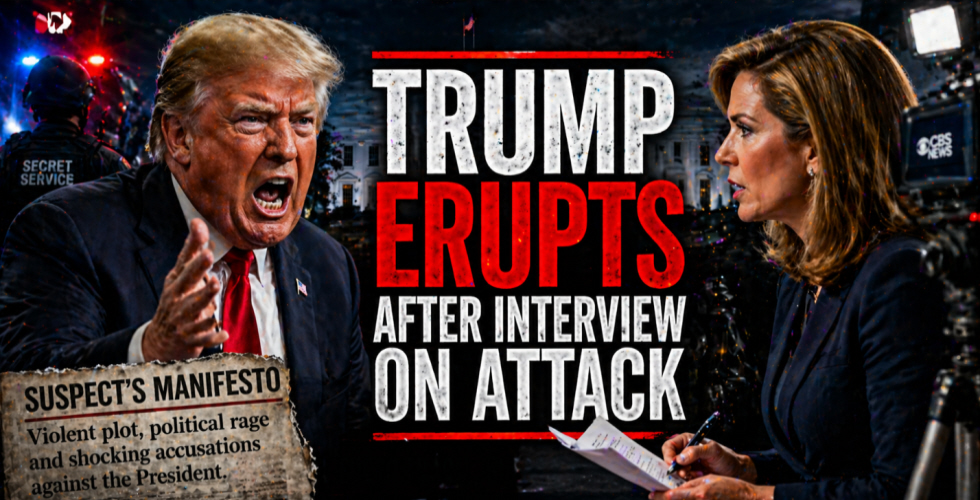
Donald Trump’s first major interview after the shooting incident during the White House Correspondents’ Dinner produced one of the most tense television moments of the political year in Washington. In front of CBS News cameras, journalist Norah O’Donnell directly confronted the president with excerpts from the alleged manifesto of the detained attacker. Trump’s reaction was immediate, harsh, and deeply personal. The incident that triggered the interview took place during the traditional correspondents’ gala in Washington, when an armed man was arrested after trying to approach the event where Trump, the First Lady, and senior government officials were present.
The Secret Service activated an emergency protocol, and the situation was treated as a high-level presidential threat. The investigation remains under intense national attention. The suspect was identified as Cole Tomas Allen, and according to authorities, he was carrying a manifesto filled with strong political and personal accusations directed at Trump. The document included extreme language, serious allegations, and a narrative loaded with political resentment. Investigators are analyzing that text as a key piece in understanding the motive behind the attempted attack.
During the interview on the program “60 Minutes,” Norah O’Donnell read part of that content in front of the president, including phrases that directly linked his name to highly sensitive accusations. That journalistic decision triggered an immediate reaction from Trump, who interrupted with visible anger and publicly rejected every insinuation contained in the manifesto. The tone of the conversation changed completely. Trump described the situation as disgraceful and accused the journalist of acting irresponsibly by giving space to that kind of accusation on national television.
With clear frustration, he defended both his personal and political image, insisting that he had been cleared of previous allegations and would not accept being judged by the words of an unstable attacker. The tension became the center of the interview. The episode once again reignited debate about the role of the media in covering politically motivated acts of violence. Some defended the decision to confront the president with the manifesto as part of the journalistic duty of transparency.
Others argued that reading those accusations on national television risked amplifying the attacker’s message and turning the spectacle into unintended propaganda. Trump’s relationship with the traditional press had already been shaped by years of open confrontation, mutual accusations, and a constant narrative of distrust. This new clash with CBS reinforces that dynamic and adds to a long list of public battles with journalists from major networks.
Every interview becomes another parallel political fight. Beyond the television scandal, the central issue remains the seriousness of the attempted attack during one of the most symbolic events on the American political calendar. Presidential security, political polarization, and the radicalization of public discourse are once again at the center of national debate. In an election season marked by extreme tension, even an interview can become another battlefield.