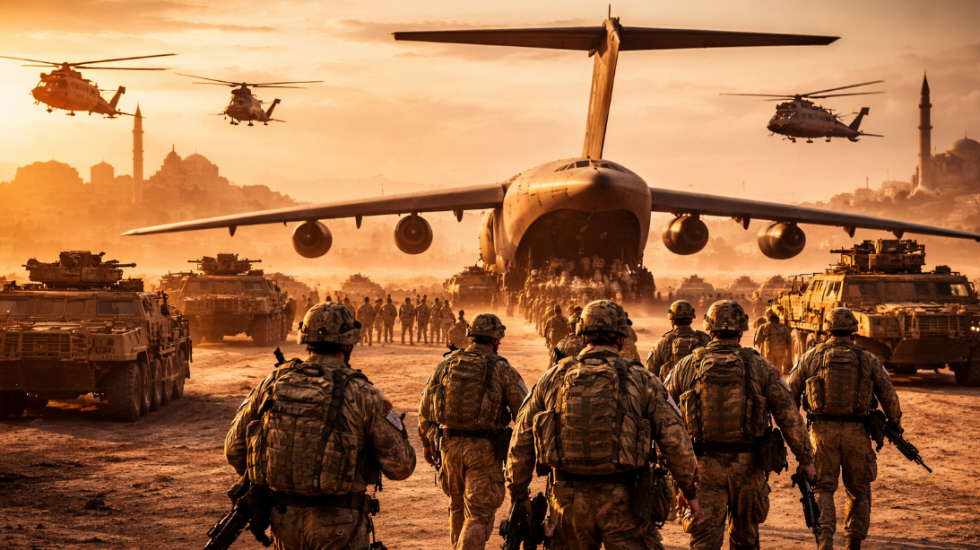
The Pentagon is deploying thousands of additional troops to the Middle East in the coming days, signaling rising military pressure on Iran. The move comes amid a fragile ceasefire that could collapse at any moment. The region is entering a critical phase of uncertainty. Tensions are rapidly escalating once again. The administration of Donald Trump is attempting to push Iran into a deal that could end the weeks-long conflict. However, negotiations remain uncertain and fragile.
The strategy combines diplomatic pressure with military buildup. The message is clear: negotiate or face consequences. According to U.S. officials, the deployment includes naval forces, Marines, and support units ready for rapid action. These troops will reinforce an already significant presence in the region. The goal is to expand available military options. This ranges from deterrence to potential direct operations.
The troop movement coincides with the possible expiration of the ceasefire, raising the risk of renewed escalation. If talks fail, Washington is considering additional strikes or even ground operations. This marks a potential turning point in the conflict. The situation could shift rapidly. Alongside military pressure, the United States is maintaining economic and maritime strategies. Naval forces are positioned to control key routes such as the Strait of Hormuz. This passage is vital for global oil flows. Any disruption would have immediate worldwide consequences. Iran has responded with warnings and threats of retaliation.
Its leadership has made clear that any aggression will be met with force. This increases the risk of a broader regional conflict. The situation is becoming increasingly volatile. U.S. allies are closely monitoring developments. Regional and global powers fear that escalation could destabilize the Middle East. The implications go beyond military concerns.
Energy markets and global security are also at stake. In this context, the troop deployment is not just a strategic move but a clear signal that the conflict may enter a new phase. The possibility of direct confrontation remains on the table. The world is watching cautiously. The next decision could reshape the crisis.