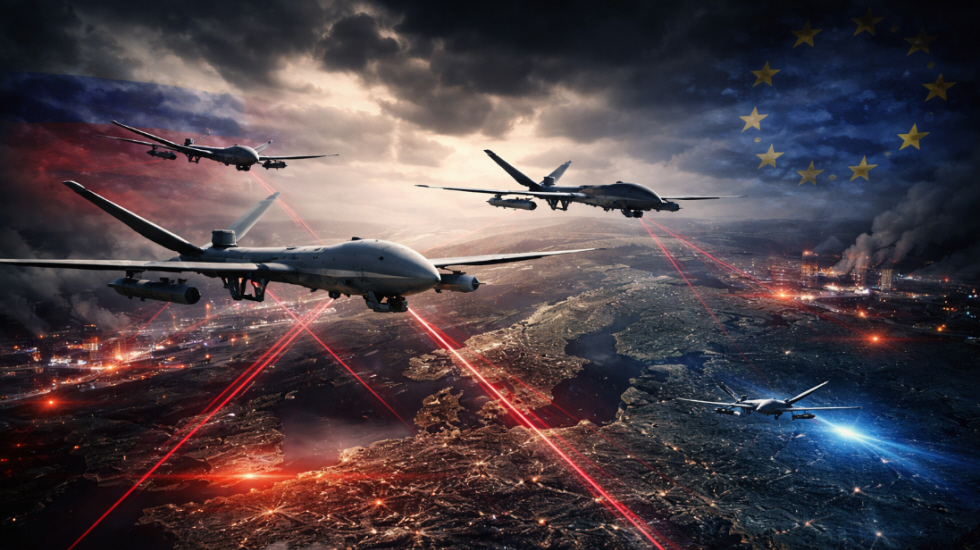
The Ministry of Defense of Russia has described new European drone deliveries to Ukraine as a dangerous escalation. According to Moscow, the move increases tensions in the ongoing conflict. The warning comes amid rising military pressure. The situation is becoming more volatile. Former Russian president Dmitry Medvedev intensified the response. He stated that companies involved in drone production could become legitimate military targets. His remarks were direct and forceful.
They immediately raised concerns across Europe. Medvedev emphasized that any infrastructure supporting Ukraine’s war effort may be considered a target by Russia. This position expands the scope of the conflict beyond the battlefield. It introduces new risks for civilian-linked industries. The message was clear and deliberate. Drones have become a central element in modern warfare. They enable precision strikes and constant surveillance capabilities.
Ukraine has increasingly relied on this technology. Europe has responded by strengthening its military support. From the European perspective, supplying drones is a defensive measure. Allied governments view it as necessary to support Ukraine. However, they also acknowledge the risk of escalation. The balance is increasingly fragile. Russia’s reaction reflects a strategy of deterrence.
By warning about potential strikes on manufacturers, Moscow aims to limit the flow of weapons. This approach places pressure on the defense industry. It also raises questions about the boundaries of conflict. The war between Russia and Ukraine continues to evolve. Each military decision carries global consequences. Europe’s indirect involvement adds another layer of complexity. The lines between support and confrontation are becoming blurred.
Overall, this episode highlights how the conflict is expanding beyond the front lines. Technology, industry, and geopolitics are now deeply interconnected. The risk of broader escalation remains present. The world is watching closely.