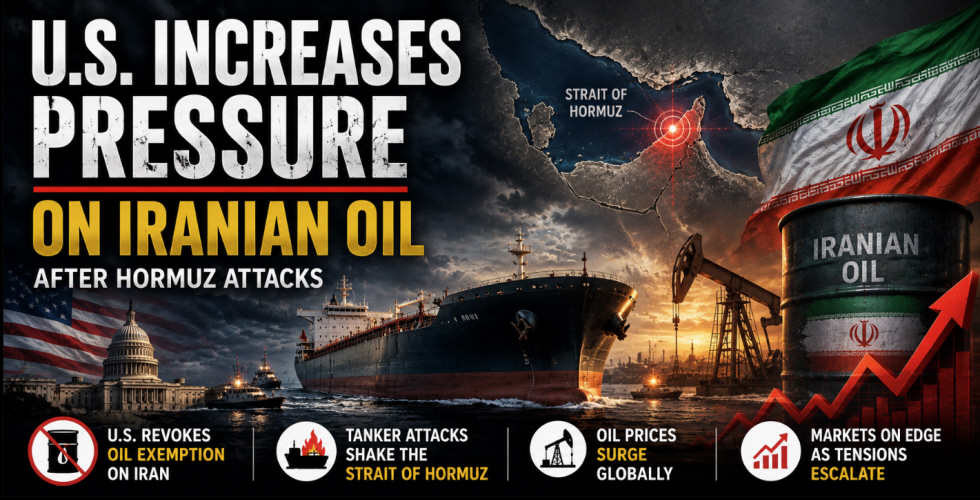
The United States has decided to revoke the exemption that allowed certain Iranian oil sales amid a new escalation in the region. The move follows recent attacks on oil tankers in the Strait of Hormuz, one of the world's most critical energy corridors. Although no group has officially claimed responsibility for the incidents, Washington responded with stronger economic pressure. The immediate result was a rise in oil prices and renewed concerns across global markets. The Strait of Hormuz plays a vital role in the transportation of crude oil and natural gas. Any threat to this strategic waterway can quickly affect energy markets and investor confidence.
A significant share of the world's energy supply passes through the strait every day. As a result, even isolated incidents can generate worldwide economic repercussions. Washington's decision is intended to reduce Iran's oil revenues and increase pressure on Tehran's leadership. For the United States, energy sanctions remain a key instrument of foreign policy. By removing the exemption, the administration is sending a strong message regarding regional security concerns. The move also highlights how geopolitical tensions continue to shape energy policy decisions. Iran is likely to view the measure as another form of economic aggression.
Tehran has repeatedly argued that U.S. sanctions unfairly target its economy and energy sector. The latest action could further harden positions on both sides of the dispute. That may reduce opportunities for meaningful diplomatic engagement in the near future. Financial markets reacted quickly because oil prices are highly sensitive to geopolitical risk. When a strategic route such as Hormuz appears vulnerable, traders often anticipate supply disruptions. Higher insurance costs, transportation concerns and uncertainty can all contribute to price increases. These factors help explain the immediate market response following the announcement.
The consequences extend well beyond the United States and Iran. Sustained increases in energy prices can affect transportation, manufacturing and consumer costs worldwide. Many countries remain vulnerable to fluctuations in fuel and commodity markets. As a result, developments in the Gulf region often have global economic implications. The decision also complicates an already fragile diplomatic environment. Questions remain about the future of communication between Washington and Tehran. Additional sanctions may strengthen hardline positions and make negotiations more difficult. This creates further uncertainty about the prospects for de-escalation.
America's allies face a delicate balancing act as tensions continue to rise. Many governments support efforts to protect international shipping routes and maritime security. At the same time, they are concerned about the economic impact of prolonged instability. Avoiding a broader regional crisis remains a priority for many world leaders. The lack of a clear claim of responsibility for the tanker attacks adds another layer of uncertainty.
Without definitive answers, accusations and counteraccusations can increase regional tensions. Miscalculations become more likely when facts remain disputed or incomplete. This uncertainty contributes to an increasingly volatile security environment. In conclusion, the revocation of the Iranian oil exemption marks a significant escalation in U.S. policy.
The decision combines economic pressure, energy security concerns and geopolitical strategy. With oil prices moving higher and diplomatic prospects becoming less certain, risks remain elevated. The Strait of Hormuz once again demonstrates its importance to both regional stability and the global economy.