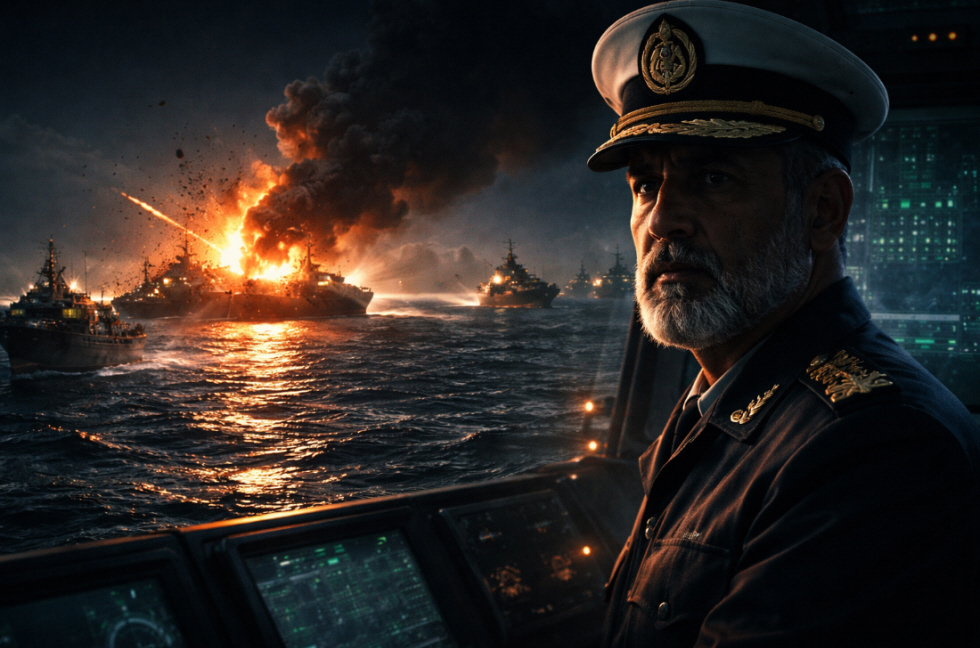
The escalation in the Middle East has entered a new phase following reports that a senior Iranian naval commander was killed in an airstrike. The information was released by Israeli authorities amid rising regional tensions. If fully confirmed, the event would represent a significant blow to Iran’s military structure. The situation remains highly volatile. According to Israeli officials, the target of the strike was the head of the naval forces of Iran’s Revolutionary Guard.
The operation was reportedly carried out with precision in a strategically important area linked to maritime activities. Other high-ranking figures were also said to have been killed. The strike is part of a series of recent military actions. The commander was considered a key figure in overseeing sensitive maritime routes, particularly in the Strait of Hormuz. This waterway is one of the most critical channels for global energy trade. His influence over naval operations made him strategically important.
His reported death could carry significant implications. However, Iranian authorities have not officially confirmed the death of the senior commander. This lack of confirmation adds uncertainty to the unfolding situation. In conflicts of this scale, information itself can become part of the strategic landscape. Independent verification remains limited. International analysts warn that such actions could further intensify the ongoing conflict.
The targeting of high-level figures often leads to direct or indirect responses. The regional balance of power may be affected. Tensions continue to rise across multiple fronts. The impact is not only military but also economic, given the importance of the Strait of Hormuz for global oil flows. Any disruption in this area can trigger immediate reactions in energy markets. Maritime security has become a global concern.
The effects extend far beyond the region. At the same time, international actors are closely monitoring developments, assessing potential scenarios. The global community remains concerned about further escalation. Calls for restraint continue, though with limited impact so far.
The situation is evolving rapidly. Meanwhile, the next steps will depend on further confirmations and possible responses. The region remains on high alert. Each development carries the potential to trigger new reactions. The situation remains fluid and uncertain.