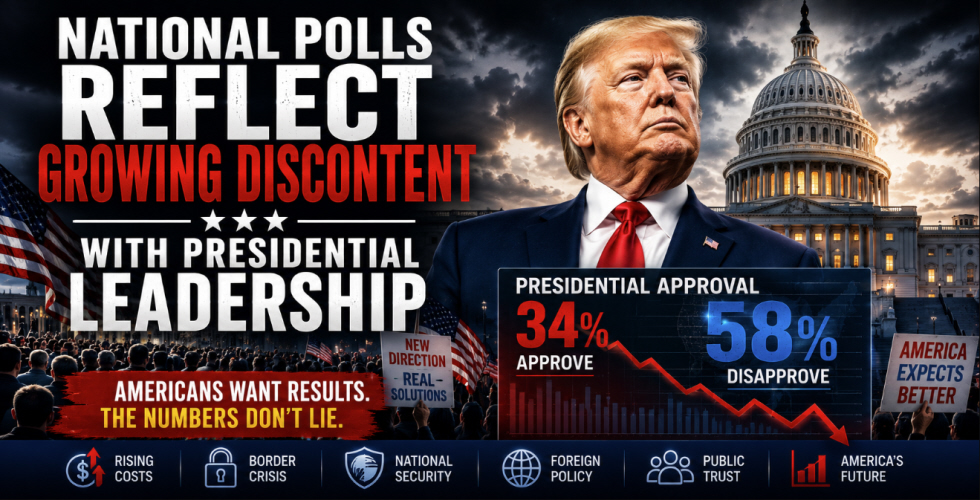
Recent public opinion surveys reveal a challenging landscape for the President of the United States. Several national polls indicate declining approval ratings among important segments of the electorate as concerns grow over the country's political and economic direction. The findings have sparked widespread discussion across Washington and throughout the nation. Public sentiment continues to play a central role in shaping the political conversation. Public approval remains one of the most significant indicators used to evaluate the performance of any administration.
Current polling suggests that a substantial portion of voters has expressed reservations about the government's handling of several key national issues. These perceptions have become an increasingly important part of the country's political debate. The administration now faces growing pressure to address these concerns. Among the issues influencing voter opinion are the economy, the rising cost of living, immigration, national security, and foreign policy. These topics remain at the forefront of public attention as millions of Americans seek practical solutions to the challenges affecting their daily lives. The way these issues evolve could have a direct impact on future approval ratings.
Public expectations remain high across the country. Political observers believe recent approval trends reflect the impact of government decisions and the nation's highly competitive political environment. Every major policy announcement, economic measure, and international development contributes to shaping public perception. In such a rapidly changing climate, voter attitudes can shift quickly as new events unfold. Political momentum remains fluid. Supporters of the president argue that many of the administration's policies require additional time before producing measurable results. They point to long-term economic initiatives, infrastructure investments, and national security strategies that they believe will strengthen the country over time.
This confidence continues to sustain a solid base of political support. Many remain optimistic about future outcomes. Critics, however, contend that economic challenges and political polarization continue to weigh heavily on the administration's public image. They argue that many Americans are looking for faster solutions to problems that directly affect their everyday lives. These differing viewpoints illustrate the deep political divisions that continue to characterize the nation. Public debate remains highly active. Approval ratings also represent an important strategic indicator for both major political parties.
Democrats and Republicans closely examine every new survey as they refine campaign strategies, strengthen political messaging, and prepare for upcoming elections. Even small changes in public opinion may influence future political decisions. Every percentage point carries significant importance. Beyond individual numbers, opinion polls provide valuable insight into the priorities and expectations of American voters. Confidence in public institutions, economic performance, and international stability continues to shape how many citizens evaluate national leadership. These trends offer a broader picture of the country's political mood.
Public opinion remains a powerful force in American democracy. As additional surveys continue to be released, the political landscape remains open to further change. Decisions made by the White House, economic developments, and global events could all influence how voters assess the administration in the months ahead. National attention remains focused on how current challenges will be addressed. Political expectations continue to evolve.
Public opinion will remain one of the most closely watched factors in American politics throughout the coming months. Approval ratings not only reflect current performance but also provide important signals about the broader political environment heading into future elections. In an increasingly competitive landscape, every shift in voter sentiment carries strategic significance. The national conversation is far from over.