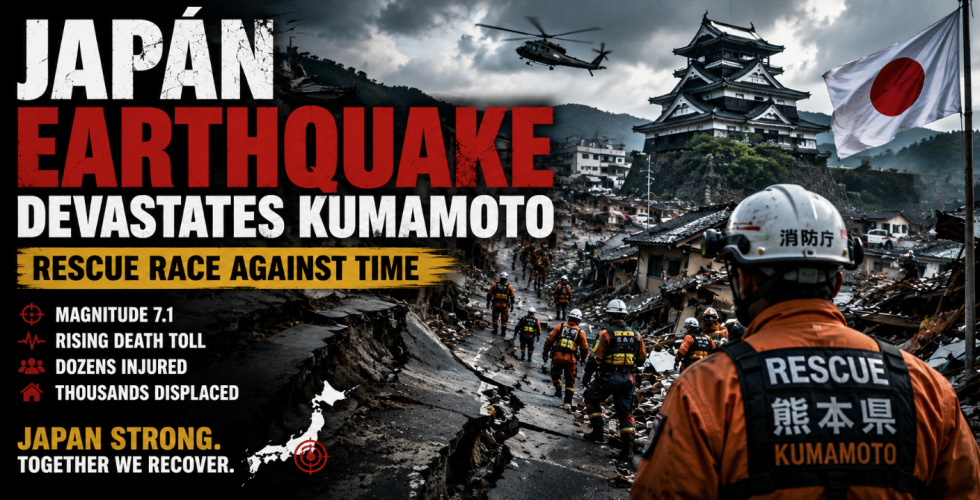
A powerful 7.1-magnitude earthquake struck Japan's Kumamoto Prefecture on the island of Kyushu, triggering a humanitarian emergency that has shocked the nation. The violent tremor caught thousands of residents by surprise, causing widespread destruction to homes, public buildings, and major transportation routes. Emergency response teams were deployed immediately to assist the hardest-hit communities. The number of confirmed fatalities continues to rise as rescue crews work tirelessly through collapsed buildings in search of survivors. Dozens of people have been injured, while many families remain displaced because of the danger posed by unstable structures.
Authorities continue to search areas where the destruction has been most severe. Scenes from Kumamoto reveal cracked roads, damaged bridges, and neighborhoods left in ruins by the powerful earthquake. In several locations, electricity and communication services were disrupted, making rescue operations even more challenging. Specialized equipment and trained search-and-rescue teams are being used to locate those trapped beneath the debris. The Japanese government quickly mobilized Self-Defense Forces, firefighters, police officers, and medical personnel to strengthen emergency operations throughout the affected region.
Hospitals remain on high alert to receive additional victims while engineers inspect schools, hospitals, and public facilities for structural safety. Saving lives remains the government's highest priority. Officials have also warned that aftershocks may continue, creating additional risks for rescue workers and residents. Seismologists are closely monitoring seismic activity while urging the public to remain alert and follow emergency instructions. Many families have taken shelter in temporary evacuation centers established by local authorities.
The earthquake is already affecting the regional economy as several manufacturing facilities temporarily suspend operations to inspect their infrastructure and ensure worker safety. Rail services and major highways have experienced partial closures, disrupting transportation and the movement of essential goods across the region. Once again, Japan has demonstrated the effectiveness of its disaster preparedness systems, developed through decades of experience with powerful earthquakes. Emergency protocols and rapid coordination between government agencies allowed resources to be deployed within hours.
Even so, the scale of the disaster presents an enormous challenge for emergency responders. Humanitarian organizations and volunteers have begun distributing food, drinking water, medical supplies, and essential items to displaced residents. Temporary shelters are providing protection for families who lost their homes or cannot safely return due to structural damage. Community solidarity has become one of the strongest symbols of hope during this difficult time.
As rescue efforts continue, engineers are conducting detailed inspections of critical infrastructure to determine the full extent of the damage. These assessments will help establish reconstruction priorities and restore essential public services as quickly as possible. Recovery is expected to require significant time and resources. The disaster serves as another reminder of Japan's constant vulnerability to major seismic events despite having some of the world's most advanced earthquake preparedness systems.
National attention remains focused on rescue operations and support for affected communities. With every passing hour, hopes of finding more survivors continue to inspire the relentless efforts of emergency teams.