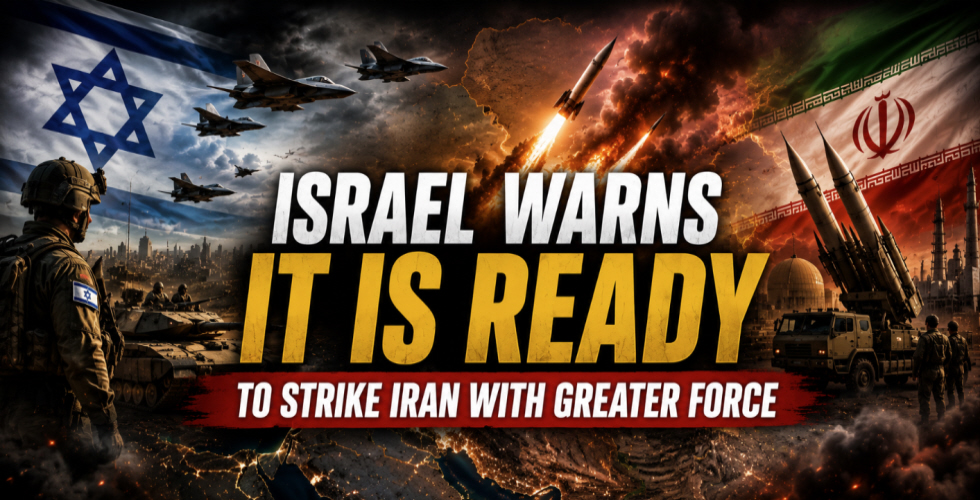
Following the recent military escalation between the United States and Iran, the Israeli government has once again taken a firm stance toward Tehran. Israeli Defense Minister Israel Katz stated that his country is prepared to act again if necessary. He warned that any future Israeli operation could be carried out with even greater force than previous campaigns. His remarks have increased international concerns about a wider conflict across the Middle East. Katz said that the Israel Defense Forces remain fully operational and ready to respond to any threat.
According to the minister, Israel will not allow Iran to rebuild military capabilities that could endanger Israeli citizens. He also emphasized that Israeli authorities continue to closely monitor political and military developments coming from Tehran. The warning reflects the high level of tension currently defining relations between the two countries. The comments came after new U.S. strikes against targets located inside Iranian territory. Washington stated that the operations were aimed at military facilities, missile positions, and strategic logistical infrastructure.
Iran responded with missile and drone attacks against locations associated with the United States throughout the region. This exchange of attacks further weakened diplomatic efforts aimed at preserving a ceasefire. Israel has so far avoided direct participation in the latest phase of fighting between Washington and Tehran. However, the Israeli government remains on high alert over the possibility that Iran could expand its military actions. Authorities continue to maintain close strategic and intelligence coordination with the United States. Israeli sources indicate that the country would be prepared to cooperate militarily if requested by Washington.
Minister Katz stated that any new operation would seek to significantly reduce Iran's military capabilities. Israel views Iran's nuclear program and missile production as direct threats to its national security. For that reason, Israeli leaders maintain that they reserve the right to act preemptively when necessary. Tehran rejects those accusations and insists that its strategic programs are primarily defensive in nature. The prospect of renewed Israeli attacks has generated concern among governments across the Middle East. A direct intervention could trigger Iranian retaliation against Israel, American bases, or regional allies.
Countries such as Qatar, Kuwait, Bahrain, and Jordan have already faced alerts or attacks during the recent escalation. These developments demonstrate how quickly a bilateral confrontation could evolve into a broader regional crisis. The Strait of Hormuz remains one of the most sensitive flashpoints within the conflict. A significant portion of the world's oil trade passes through this strategically important waterway. Attacks on vessels and restrictions on navigation have raised concerns among energy markets and international businesses. A prolonged escalation could lead to higher oil prices and broader economic consequences worldwide.
Iran has warned that it will respond immediately and forcefully to any new attack on its territory. Iranian officials argue that Israeli threats confirm an ongoing policy of confrontation. Tehran has also accused both the United States and Israel of attempting to weaken its political institutions and defensive capabilities. Iranian leaders insist that they will not accept pressure aimed at limiting their sovereignty or regional influence. As threats continue, international actors are urging renewed diplomatic efforts. Mediators are attempting to prevent the conflict from completely destroying any remaining prospects for a negotiated agreement.
However, deep mistrust between the parties continues to complicate meaningful progress. Every new attack narrows the space for diplomacy and increases the risk of decisions that may be difficult to contain. Israel Katz's warning confirms that the confrontation with Iran remains far from resolved. Israel insists it is prepared to defend its interests and launch more severe strikes if new threats emerge. Iran, meanwhile, promises a strong response to any military operation conducted against its territory. The coming weeks may determine whether diplomacy prevails or whether the Middle East enters an even more dangerous phase of instability.