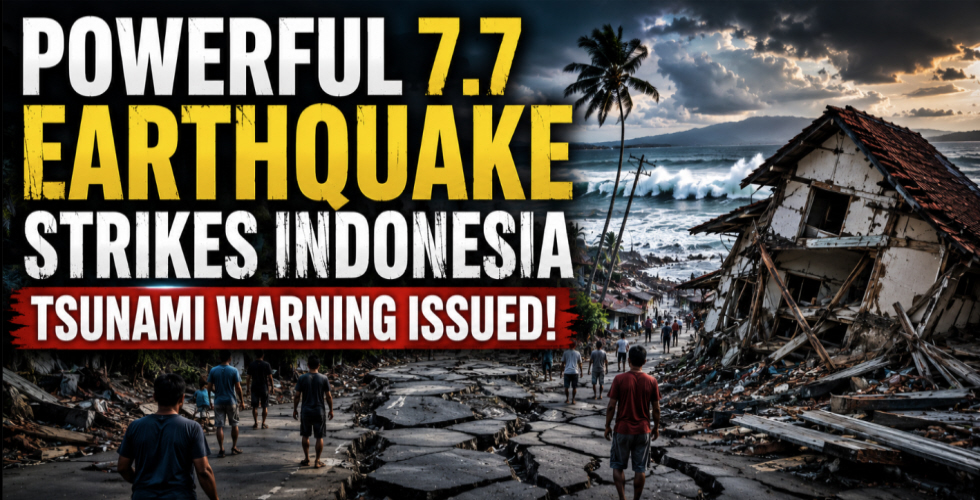
A powerful magnitude 7.7 earthquake struck eastern Indonesia early Saturday, August 15, local time, causing widespread alarm and prompting authorities to initially issue a tsunami warning. The earthquake was centered in the Flores region of East Nusa Tenggara province and was strongly felt across several surrounding communities. Thousands of residents immediately left their homes because of the intensity and duration of the shaking. Emergency agencies quickly began assessing possible damage while numerous aftershocks continued to be recorded.
The earthquake occurred at approximately 4:58 a.m., when much of the population was still sleeping, increasing concerns that people could have been trapped inside damaged buildings. Initial magnitude estimates varied slightly among different seismological agencies, which is common during the first hours following a major earthquake. Subsequent measurements placed the event among the strongest earthquakes recently recorded in this part of the Indonesian archipelago. Its relatively shallow depth contributed to the considerable intensity of the shaking experienced on land. Indonesian authorities initially issued a tsunami warning for several coastal areas and urged residents to immediately move away from beaches and low-lying locations.
Thousands of people headed toward higher ground while monitoring centers analyzed changes in sea levels following the earthquake. Waves of less than one meter were subsequently observed, and the warning was lifted after the threat of a destructive tsunami diminished considerably. The precautionary evacuation reduced the possibility of an additional tragedy while authorities determined the true extent of the danger. Initial reports confirmed at least two deaths and one injured person in Sikka, although authorities warned that those figures could change as assessment operations continued. Reports also began emerging of homes and other structures damaged by the powerful shaking. Buildings in several communities will need to be inspected before authorities can determine whether they remain safe for occupation.
Local emergency teams are surveying affected areas while receiving additional information from more remote communities. One of the most tense situations occurred at medical facilities in Ende, where patients were temporarily moved into open areas as a precaution. Following a major earthquake, hospitals must rapidly determine whether their structures remain stable because strong aftershocks can produce additional damage. Medical personnel remained prepared to receive possible casualties while simultaneously protecting patients who were already hospitalized.
The immediate priority continues to be locating affected residents and maintaining essential emergency services. Indonesia lies along the Pacific Ring of Fire, an extensive region where several tectonic plates interact and generate exceptionally high levels of seismic and volcanic activity. This geological location makes the country one of the most earthquake-prone territories in the world. Flores and other eastern Indonesian islands are particularly exposed because of the complex interaction of tectonic plates beneath this portion of the archipelago. Residents are familiar with earthquakes, but an event of this magnitude always represents a serious threat. Numerous aftershocks followed the main earthquake, keeping many residents outside their homes during the hours that followed.
Authorities have advised people to stay away from visibly damaged buildings because weakened structures can collapse during considerably smaller aftershocks. Emergency teams are also monitoring the possibility of landslides in mountainous regions where powerful shaking can destabilize slopes. Roads, bridges and communications networks will need to be inspected before the full impact on regional infrastructure can be determined. The rapid activation of warning systems once again demonstrated the importance of earthquake and tsunami preparedness in Indonesia.
The country has progressively strengthened its monitoring and emergency systems after experiencing some of the world's most devastating natural disasters in recent decades. However, the geography of thousands of islands and numerous coastal communities makes it difficult to guarantee that every warning immediately reaches the entire population. Every major earthquake tests coordination among scientists, national authorities, local governments and emergency services. During the coming hours, monitoring both the aftershocks and reports arriving from communities near the epicenter will remain essential.
Initial casualty figures following a major earthquake can change quickly as rescue teams reach locations that were temporarily isolated. Authorities will also need to determine how many homes were destroyed or damaged and whether electricity, water or transportation networks suffered significant disruption. Until those assessments are completed, any estimate of the earthquake's overall consequences must remain provisional.
The earthquake once again highlights Indonesia's enormous seismic vulnerability and the need to keep emergency systems permanently prepared. The tsunami warning was eventually lifted without a major destructive wave being recorded, but the powerful shaking has already caused casualties and damage that will continue to be assessed.
For affected communities, the next stage involves inspections, assistance and continued vigilance against additional aftershocks. As new reports arrive from Flores and other eastern regions, the priority remains protecting residents and determining the true extent of this powerful seismic event.