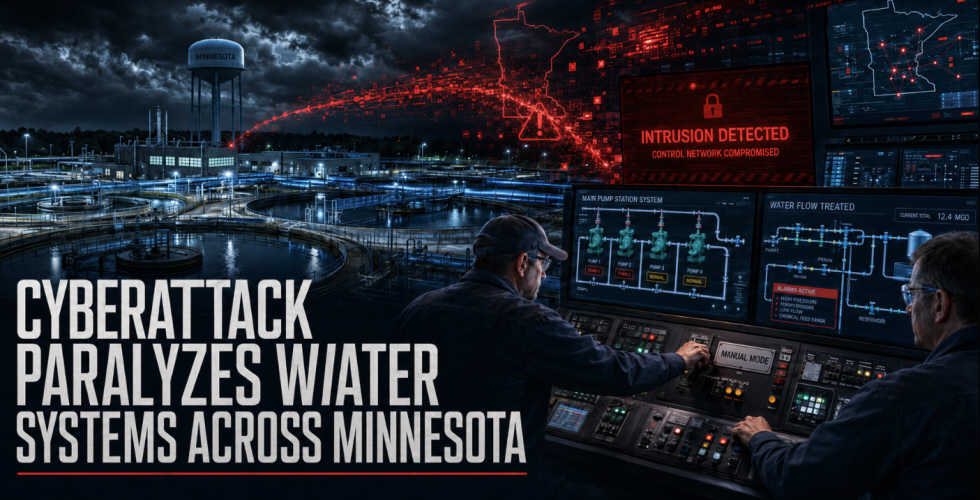
A coordinated cyberattack targeted more than thirty community water systems across the state of Minnesota. The attackers accessed operational technology used to control essential functions at the facilities. The incident affected equipment associated with pumps, wells, storage tanks, and treatment processes. Authorities immediately activated a statewide response to contain the threat and restore control. The attacks occurred over two consecutive days and primarily affected smaller communities. In some locations, the intruders disrupted communications between operators and automated systems.
Several plants were forced to abandon remote controls temporarily and continue operating manually. The workers’ rapid response prevented the disruptions from causing more serious consequences. The community of Braham experienced one of the most significant incidents recorded during the offensive. The attack temporarily shut down operations at its water treatment plant. Workers restored the facility’s normal functions in less than two hours. During that period, manual procedures protected the continuity and safety of the service.
Other communities experienced communication failures, unauthorized changes, and difficulties accessing their systems. The attackers apparently attempted to modify passwords and prevent operators from regaining control. This technique can transform a digital intrusion into a physical disruption of critical infrastructure. The ability to manipulate industrial equipment represents a direct threat to essential public services. Authorities have found no evidence that drinking water was contaminated during the attack. They also issued no general instructions to boil water, reduce consumption, or suspend service.
The affected systems continued supplying water under the direct supervision of local operators. Public health officials remain vigilant for any additional risks or delayed consequences. The FBI is investigating the attack alongside state and federal cybersecurity agencies. Specialists are analyzing the connections used, access methods, and compromised equipment. Their priority is identifying those responsible and determining the offensive’s complete scope. Investigators also want to know whether the attackers retained hidden access inside any facility.
Some preliminary evidence resembles previous operations attributed to groups associated with Iran. However, no American agency has officially identified those responsible for the Minnesota attack. The investigation remains open, and more comprehensive technical analysis is still required. Premature attribution could produce incorrect conclusions and further increase international tensions. The threat appears to extend beyond Minnesota and could be part of a broader national campaign. Michigan reported similar activity affecting nine of its community water systems. Federal authorities are also examining potentially related incidents in several other states.
This expansion demonstrates the need for coordinated defenses among governments, municipalities, and private operators. Many smaller water plants operate with limited budgets, outdated equipment, and insufficient cybersecurity personnel. Some industrial controllers remain directly connected to the internet and protected by weak passwords. This combination allows remote attackers to identify vulnerable access points with relative ease.
Modernizing these systems has become an urgent necessity for protecting millions of people. The Minnesota attack demonstrates how cyberwarfare can directly affect the daily lives of entire communities. Water, energy, transportation, and communications increasingly depend on interconnected digital systems. A successful intrusion could interrupt essential services or place public health in danger. The United States must now strengthen its infrastructure before a more destructive attack occurs.