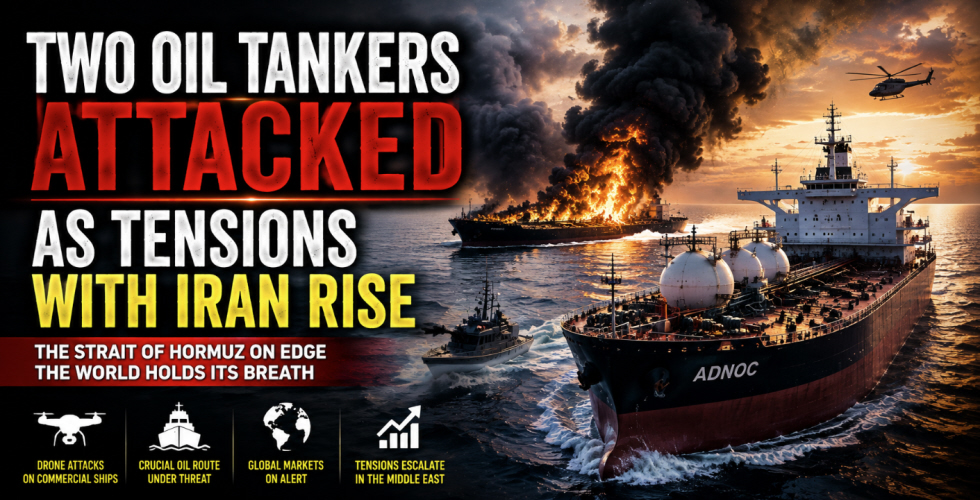
Two oil tankers linked to the United Arab Emirates state energy company ADNOC were attacked while traveling through the strategic Strait of Hormuz, once again increasing tensions along one of the world’s most important maritime routes. The incidents occurred as the vessels were passing through the strait during the night on Thursday. The United Arab Emirates directly blamed Iran for the attacks, saying the vessels were struck by drones. No casualties were reported, and the situation aboard both ships was later brought under control.
The United Arab Emirates strongly condemned the attacks and described them as a serious threat to international freedom of navigation. Abu Dhabi said actions against commercial vessels represent a dangerous escalation at a moment of significant regional tension. Authorities also warned that using the Strait of Hormuz as an instrument of political pressure could produce economic consequences far beyond the Persian Gulf. Iran did not initially respond directly to the new accusations made by the Emirates.
The incident is particularly significant because the Strait of Hormuz is a vital artery for the global transportation of oil and natural gas. Before the current crisis, a substantial portion of the petroleum consumed worldwide traveled through these waters every day toward markets in Asia, Europe and other regions. Any prolonged disruption can quickly reduce available supplies and increase maritime transportation costs. For that reason, every new attack against oil tankers immediately raises concerns among governments, energy companies and international markets.
Maritime traffic through Hormuz remains well below levels recorded before the conflict, while numerous companies continue evaluating the risks of crossing the area. Some vessels have used routes controlled by Iran, while other companies have preferred to delay operations because of the possibility of additional attacks. The uncertainty is disrupting traditional routes used for decades to transport petroleum from the Gulf’s major producers. The strait has consequently become one of the most sensitive points in the confrontation between Washington and Tehran.
The United States has simultaneously increased its warnings against Iran and threatened to intensify economic pressure if Tehran continues restricting navigation. Washington maintains that the maritime passage must remain open to international commerce and rejects any Iranian attempt to impose conditions on vessels traveling through these waters. The American naval presence remains one of the principal elements of pressure in the region. Every new maritime incident increases the possibility that a limited confrontation could rapidly develop into a much larger crisis.
Iran, meanwhile, maintains that any lasting solution must include significant economic and political concessions from the United States. Tehran is demanding sanctions relief, access to frozen assets and guarantees concerning future American military operations before accepting a complete normalization of maritime traffic. Significant differences remain between the two sides despite diplomatic efforts conducted during recent weeks. Negotiations aimed at stabilizing the situation have still not produced an agreement capable of fully restoring normal passage through the strait.
The attack against the two oil tankers also generated reactions from several Arab countries, which expressed solidarity with the United Arab Emirates and called for guarantees protecting commercial navigation. Qatar, Kuwait, Bahrain and other regional governments have insisted that international maritime corridors cannot become instruments of political or military pressure. Concerns are increasing that additional incidents could eventually draw other Gulf countries directly into the confrontation. An escalation of that magnitude would have consequences that could become extremely difficult to contain.
Oil markets reacted once again to rising tensions, with international crude prices facing renewed upward pressure. Traders continue monitoring every development involving Hormuz because of the enormous volume of energy that has historically traveled through this maritime corridor. The combination of attacks against vessels, economic sanctions and reduced traffic is creating an especially delicate environment for global markets. A more serious interruption could quickly affect fuel and petroleum-product prices in different parts of the world.
The situation also represents an enormous challenge for Gulf oil companies, which must continue exporting energy while attempting to protect vessels, crews and cargo. ADNOC has continued operations despite repeated incidents during the conflict and says it remains committed to serving its international customers. However, every attack increases expenses associated with security, insurance and maritime transportation. Maintaining functioning energy routes will therefore be essential to preventing even greater disruptions to global supplies.
The latest attacks demonstrate that the Strait of Hormuz remains one of the most dangerous arenas in the confrontation involving Iran and one of the locations capable of immediately affecting the global economy. Although no casualties were reported aboard the two tankers, the strategic significance of the incident extends far beyond the damage to the vessels.
The United States, Iran and regional powers now face another test in preventing maritime tensions from escalating further. Until a lasting political agreement is reached, every ship crossing Hormuz will continue navigating one of the world’s most dangerous and strategically important waterways.